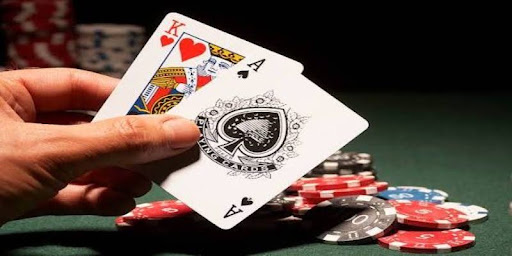
Blackjack strategy is the reason this game sits apart from every other title on a casino floor. Roulette, baccarat and slots hand you a fixed disadvantage no matter what you do. Blackjack does not. The decisions you make on each hand directly change the house edge, and a player following correct play faces roughly 0.5 percent against, while a player guessing faces closer to 2.5 percent. That gap is the entire difference between a hobby that costs a little and one that drains a balance quickly. This guide covers the chart, the variants available at sao789, and the table habits that protect what you win.
Core blackjack strategy chart decisions explained
Core blackjack strategy chart decisions every player should learn before playing
At sao789 , Everything begins with a single reference table that tells you the mathematically correct move for every combination you can be dealt.
Hard hands and when to stand
A hard hand contains no ace, or an ace counted as one. The rules are unforgiving but simple. Stand on 17 or higher regardless of what the dealer shows. Stand on 13 through 16 when the dealer displays 2 through 6, since a weak upcard means the dealer busts often. Hit those same totals against 7 through ace. Always hit 11 or below, and double on 11 whenever the rules allow it.
Soft hands and the ace advantage
A soft hand holds an ace counted as eleven, which means you cannot bust on the next card. This freedom changes the correct play entirely. Soft 18 stands against a dealer 2 through 8 but should be hit against 9, 10 or ace. Soft 13 through 17 are doubling opportunities against a dealer showing 5 or 6. Beginners routinely stand too early on soft totals and leave value on the table.
Splitting pairs correctly
Always split aces and eights. Never split tens or fives. Split twos, threes and sevens against a dealer 2 through 7. Split nines against everything except 7, 10 and ace. These six rules cover almost every pair you will see, and memorising them removes the guesswork that costs the most money.
Doubling and surrender
Double on 10 against a dealer 2 through 9, and on 9 against 3 through 6. Where surrender is offered, giving up half your stake on 16 against a dealer 9, 10 or ace is a small but real saving across thousands of hands. Applying this blackjack strategy consistently, rather than only when a hand feels close, is what produces the low house edge the numbers promise.
Blackjack strategy adjustments for sao789 game variants
How blackjack strategy shifts across different table variants and rule sets
The chart is a baseline, and each version of the game changes it slightly, so knowing which table you are sitting at matters as much as knowing the moves.
- Classic blackjack pays 3 to 2 on a natural and follows the standard chart with no adjustments needed. This is the version to learn on.
- Blackjack Switch lets you swap the second card between two hands, which rewards aggressive splitting but usually pays even money on naturals, so the trade off is real.
- Speed blackjack deals far more hands per hour. The correct moves do not change, but your exposure per session rises sharply, which means smaller stakes are essential.
- Live dealer tables at sao789 add side bets such as perfect pairs and 21+3. These carry house edges above five percent and sit outside optimal play entirely.
- Multi deck shoes shift a handful of borderline decisions. Doubling on soft 19 and splitting certain low pairs become slightly less attractive as deck count rises.
The practical takeaway is straightforward. Read the rule sheet before your first hand, confirm the natural pays 3 to 2, and adjust your blackjack strategy only where the rules genuinely demand it rather than on instinct.
Bankroll rules that support your blackjack strategy
Bankroll rules and table selection that support a disciplined blackjack strategy
Correct play protects you from the house, but only staking discipline protects you from variance, and the two have to work together.
- Match the table to your bankroll. A sensible floor is forty minimum bets. If your session budget is two million dong, a table with a fifty thousand minimum is appropriate and a two hundred thousand minimum is not.
- Refuse 6 to 5 payouts. A table paying 6 to 5 on naturals adds roughly 1.4 percent to the house edge, which wipes out every advantage correct play gives you. Walk away and find a 3 to 2 table.
- Count hands per hour, not just stake size. A fast table delivers two or three times the decisions of a live one. Your hourly risk scales with volume, so lower the unit accordingly.
- Skip the side bets. They are entertaining and expensive. Every unit placed there is a unit not working at the low edge your blackjack strategy has earned.
- Read bonus terms before claiming. Table games often contribute a reduced percentage toward wagering requirements at sao789, which can turn an attractive offer into a long grind.
- Set a stop point in both directions. Decide your loss limit and your walk away profit before the first hand, and honour both without negotiation.
- Never chase with progression. Doubling after losses does not change the odds of the next hand. It only shortens the time until a losing run reaches your table limit.
Discipline is the least exciting part of the game and the part that decides whether a session ends flat or empty.
Conclusion
Blackjack strategy is not a secret system or a pattern to spot. It is a fixed set of correct responses that anyone can learn in an afternoon and apply for years. Memorise the hard and soft hand rules, learn the six splitting decisions that cover nearly every pair, confirm the payout structure before you sit down, and keep your stake proportional to your bankroll rather than to how the last hand felt. The tables at https://ssao789.day/ give you classic, speed and live dealer formats, so choosing one that matches your pace and budget is entirely within your control. Play within limits you set in advance, treat every session as one sample in a much longer run, and let the maths do what it is designed to do.