Blackjack basic strategy provides a structured way to approach one of the most recognizable casino card games. Rather than relying entirely on instinct, players can use mathematical principles to determine when to hit, stand, double down, or split. For those exploring blackjack at Go88, understanding these fundamentals can make the gameplay process more organized and easier to follow.
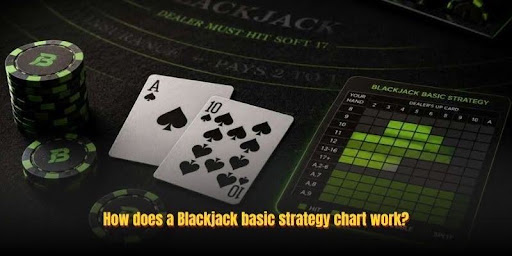
How does a Blackjack basic strategy chart work?
At Go88 , A Blackjack basic strategy chart organizes recommended decisions according to the player's hand and the dealer's visible card. By matching these two pieces of information, players can quickly identify whether hitting, standing, doubling, or splitting is generally the preferred mathematical choice.
Understanding the rows and columns
The chart is usually divided into sections that represent different hand categories and dealer upcards. Reading the layout correctly is the first step toward using Blackjack basic strategy effectively.
- Player's hand: Usually displayed along the left side of the chart.
- Dealer's upcard: Listed across the top, commonly from 2 through Ace.
- Intersection: The point where the player's hand and dealer's card meet indicates the recommended action.
- Color or symbol coding: Some charts use different colors or abbreviations to make decisions easier to identify.
Learning the main action symbols
Most strategy charts use short labels to represent the available blackjack decisions. Familiarizing yourself with these symbols makes the chart much faster to interpret.
- H: Hit and request another card.
- S: Stand and keep the current hand.
- D: Double down when the rules allow it.
- P: Split a matching pair into two separate hands.
- DH: Double if permitted; otherwise, hit.
- DS: Double if permitted; otherwise, stand.
How does a Blackjack basic strategy chart work?
Reading hard hands
Hard hands contain no usable Ace that can be counted as 11 without exceeding 21. The correct action can change considerably depending on the dealer's exposed card.
- Compare the total of the hard hand with the dealer's upcard.
- Pay particular attention to borderline totals where hitting or standing can produce different outcomes.
- Check the table rules because doubling options may vary.
- Avoid making decisions solely because a previous hand produced a particular result.
Reading soft hands
A soft hand contains an Ace that can currently be valued as 11 without making the hand exceed 21. These situations often provide additional flexibility because the Ace can switch between 11 and 1.
- Identify whether the hand contains a usable Ace.
- Compare the soft total with the dealer's visible card.
- Consider doubling opportunities when the chart recommends them and the table rules permit it.
- Remember that a soft hand can change value after receiving another card.
Blackjack basic strategy for different hand combinations
Different blackjack hands can call for completely different decisions, even when their totals appear similar at first glance. Understanding how Blackjack basic strategy responds to hard hands, soft hands, and pairs can help players approach each situation more systematically when exploring the game at Go88.
|
Hand combination
|
Typical situation
|
Key consideration
|
|
Hard 8
|
No Ace counted as 11
|
Look at the dealer's upcard before making the next decision
|
|
Hard 12
|
Total of 12 without a usable Ace
|
Avoid treating every 12 the same way
|
|
Hard 16
|
A relatively weak hard total
|
Dealer's exposed card can significantly influence the choice
|
|
Soft 13–15
|
Ace plus low-value cards
|
The flexible Ace gives the hand additional room
|
|
Soft 18
|
Ace plus 7
|
Do not automatically stand on every soft 18
|
|
Pair of 8s
|
Two cards with the same value
|
Splitting can create two separate opportunities
|
|
Pair of Aces
|
Two Aces
|
Starting two hands with an Ace can be preferable to keeping a total of 12
|
|
Pair of 10s
|
Two cards valued at 10
|
The initial total is already strong
|
|
Pair of 5s
|
Two cards valued at 5
|
Doubling may be considered against suitable dealer cards
|
|
Blackjack
|
Ace plus a 10-value card
|
The hand already has the strongest natural total unless special rules apply
|
Blackjack basic strategy for different hand combinations
Common mistakes when using basic strategy in Blackjack
Even players who understand the fundamentals can make avoidable errors when applying Blackjack basic strategy during an actual session. Most mistakes come from abandoning the recommended decision because of emotions, misunderstandings about hand types, or assumptions about what the next card will be.
Relying on intuition instead of the chart
One of the most common errors is choosing an action based on how a hand feels rather than following the mathematically preferred decision. Blackjack basic strategy is designed to provide a consistent framework, so changing choices based on short-term expectations can undermine its purpose.
- Avoid assuming a particular card is “due” to appear.
- Do not change a decision simply because previous hands had similar outcomes.
- Use the dealer's visible card as part of the decision-making process.
- Refer back to the strategy chart when uncertain.
Confusing hard and soft hands
A hand containing an Ace can behave differently from a hand with the same numerical total but no usable Ace. Misclassifying these situations may lead to an incorrect action.
- Check whether the Ace can currently count as 11 without exceeding 21.
- Separate hard hands from soft hands when consulting a chart.
- Remember that the value of an Ace can change after another card is dealt.
Ignoring table rules
Strategy recommendations can vary depending on the specific blackjack rules being used. Players who overlook details such as dealer behavior, doubling restrictions, or surrender availability may apply a chart that does not fully match the table.
- Check whether the dealer stands or hits on soft 17.
- Review available doubling options.
- Confirm whether surrender is offered.
- Check restrictions on splitting pairs or resplitting.
- Use a strategy chart designed for the relevant rule set.
Chasing losses after an unfavorable result
A poor outcome can tempt players to abandon their planned approach and make larger or impulsive decisions. When using Blackjack basic strategy at Go88, it is better to treat each hand as a separate decision rather than trying to recover previous losses through increasingly aggressive play.
- Set a spending limit before starting.
- Avoid increasing stakes solely because of a losing streak.
- Do not assume a win is “due” after several losses.
- Take a break when emotions begin affecting decisions.
>> Read more: Hướng dẫn Tải Go88
Common mistakes when using basic strategy in Blackjack
Conclusion
Blackjack basic strategy gives players a structured framework for approaching different hand combinations without relying entirely on instinct or emotion. By understanding chart symbols, distinguishing hand types, and avoiding common mistakes, beginners can make more informed decisions throughout a session. For those exploring blackjack at Go88, responsible play and careful bankroll management should remain an essential part of the overall experience.