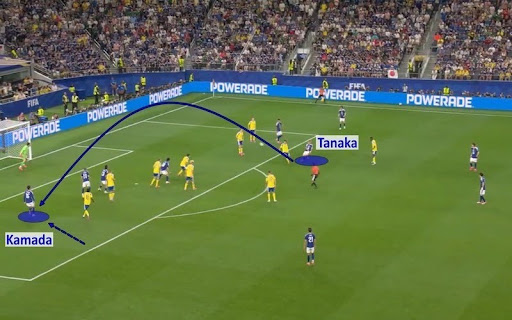
Overall attacking tactics refer to a style of play in which multiple positions participate in building and developing attacking moves rather than relying on just a few individuals. When watching matches through Xoilac TV, viewers can recognize this tactical approach through the way a team controls space, circulates the ball, and continuously creates multiple routes toward the opponent's goal.
What Are Overall Attacking Tactics?
In football, effective attacking is not simply about sending as many players forward as possible. Overall attacking tactics require the entire formation to work together in an organized manner, maintain appropriate distances, and create continuous support options from the defensive line to areas near the penalty box.
The key feature of this approach lies in involving multiple positions in the process of developing play. A center-back may initiate an attack, a full-back may push forward to provide width, a midfielder may control the central area, while attacking players continuously interchange positions to stretch the defensive line.
Players move together and support one another during an organized attacking move
When xem xôi lạc, fans can pay attention to how a team circulates the ball from its own half rather than simply watching the player in possession. Players without the ball often play a crucial role by creating space, opening passing lanes, or forcing opponents to adjust their defensive positions.
Key Elements of an Overall Attacking System
A stable attacking system needs to combine ball control, off-the-ball movement, and the ability to exploit space. According to analyses frequently featured on Xoilac 86, the effectiveness of this style depends more on the level of connection between the lines than on the number of players involved in attack.
Controlling Space Across the Entire Pitch
Space is one of the most important factors in overall attacking tactics. When a team has possession, players need to spread out sufficiently to force the opposing defense to become more dispersed. If the opponent concentrates players in the center, the two flanks become suitable areas for developing attacks.
Conversely, if the opposing defense stretches horizontally, spaces may appear between the lines. Midfielders or dropping forwards can move into these areas to receive the ball, turn, and deliver decisive passes.
Circulating the Ball at the Right Tempo
Overall attacking does not mean that the ball must be passed quickly in every situation. What matters is changing the tempo at the right moment. At times, a team needs to retain possession to draw opponents out of position, but once space appears, the speed of the attack must immediately increase.
The speed of ball circulation helps the attacking team stretch the opponent's defensive structure
One-touch or two-touch passes help the ball move faster than the defensive line. If the circulation is accurate enough, opponents often struggle to maintain their defensive structure and may leave gaps in dangerous areas.
Off-the-Ball Movement and Positional Interchanges
Players without the ball have a major influence on the quality of an attacking move. A forward may drop deeper and draw a center-back with him, creating space for a midfielder or winger to make a run into the area. Similarly, an advancing full-back can allow a winger to move inside toward the center.
On Xôi Lạc TV, viewers can often easily identify teams that are good at positional interchanges because their formation constantly changes when they have possession. However, movement must still remain within a certain structure to prevent multiple players from occupying the same area.
How to Implement Overall Attacking Tactics During a Match
For overall attacking tactics to be effective, a team must organize each phase of its attacking build-up clearly. From moving the ball out of the defensive third to approaching the penalty area, every line needs to understand its position and responsibilities.
Building Play From the Defensive Line
Many teams choose to initiate attacks from the goalkeeper and center-backs. The two center-backs can spread toward the sides while a midfielder drops deeper to provide another passing option. This setup gives the team more choices when the opponent presses from the front.
If the opponent pushes several players forward to apply pressure, space will appear behind the pressing line. A pass that bypasses the first layer of pressure can immediately allow the attacking team to create a numerical advantage in midfield.
Creating a Numerical Advantage in Midfield
Controlling the midfield allows a team to determine the direction in which an attack develops. Some systems require wingers to move inside or full-backs to shift into central areas in order to create an additional passing option.
Creating a numerical advantage in midfield helps a team maintain control and develop play
When following kết quả bóng đá châu âu, fans can see that teams that control the central area well often maintain a more consistent number of chances. However, possession is only valuable when it is converted into the ability to progress the ball and create dangerous situations.
Exploiting Space in the Final Third
Once the ball has been brought close to the penalty area, the demands for speed of execution and accuracy increase considerably. Players can use small-group combinations, overlapping runs, crosses, passes through the lines, or runs behind the defensive line to create shooting opportunities.
From the perspective of Xoilac Tivi, teams that attack well generally do not rely on just one approach. If the center is blocked, they quickly move the ball to the flank. When the opponent shifts players toward the wing, the ball is then brought back into the area in front of the penalty box to exploit the newly created space.
Advantages and Limitations of Overall Attacking Play
The ability to create multiple routes toward goal is a major advantage of overall attacking tactics. A team does not depend entirely on one striker or one creative player because opportunities can come from full-backs, central midfielders, wingers, or late runs from deeper positions.
Another advantage is the ability to maintain pressure. When the formation stays compact and provides appropriate support, the team can immediately challenge for the ball after losing possession in the opponent's half. This helps limit the defending team's time to organize a counterattack.
However, involving many players in attack also creates risks behind the ball. If the team loses possession while both full-backs are pushed high, the spaces in the two wide channels can be exploited. Therefore, one or two midfielders often need to maintain their positions to protect the area in front of the center-backs.
The ability to transition after losing possession determines the safety of the attacking system
Those following kết quả bóng đá châu âu can also recognize that controlling a match does not always mean winning it. A team may have a lot of possession but lack the movements needed to break down the opponent's structure. In such cases, a high possession percentage only provides an advantage in terms of time spent with the ball and does not necessarily produce many clear chances.
In addition, this style requires players to possess a strong technical foundation, positional awareness, and good decision-making ability. Just one inaccurate pass while the team is pushing forward can give the opponent an opportunity to counterattack. Therefore, when xem xôi lạc, viewers should also observe how a team reacts immediately after losing possession in order to fully assess the quality of its system.
Conclusion
Overall attacking tactics are a method of organizing play based on coordinated teamwork, exploiting space, and flexible movement from multiple positions. Understanding these operating principles makes it easier for viewers to identify tactical intentions during each attacking move. Following Xôi Lạc Link is also a way for fans to continue exploring more interesting football knowledge and perspectives.