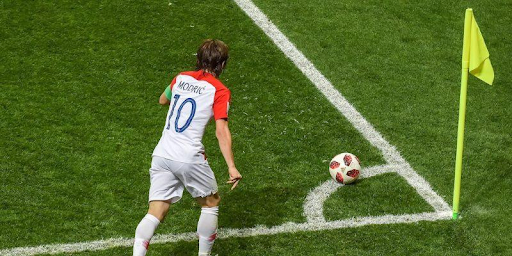
Corners betting is perhaps one of the most statistically reliable markets in football betting, where the punter that studies playing styles, tactical set-ups and head to head data will fare better than the one who bets only on the outcome of the game. The number of corners typically follows observable trends for which the common bettor often is not aware of, therefore allowing for opportunity to capitalize on the bookmaker’s odds. KÈO BÓNG ĐÁ offers in-depth odds and live corner stats for all the major leagues, helping every punters to have the advantage when it comes to live betting on these specialized market.
How corners betting markets are structured
At kèo bóng đá hôm nay , Corners betting encompasses a number of different markets, and to be able to predict correctly and put one’s money in the right place, one must learn how to approach each market.
An overview of corners betting in football
Total corners over/under
The most common corner bet available is total corners over/under which strictly offers betting on the question of whether or not the total number of corners to be taken by both teams in a game over the full 90 minutes will either surpass or not surpass a line set by the bookmaker. Standard KÈO BÓNG ĐÁ will have this line set at 9.5 to 10.5 corners per match in top European leagues, with the specific number subject to changes according to the attacking nature and characteristic tactical traits of the particular two teams on the pitch. In order for the right side of the line to be determined it is also necessary to break down the averages of corners won and conceded per team per match individually, as a high corner taker that is forced to play against a defensively compact team sitting deep will produce a much different end result than two attacking sides pressing high up the pitch.
Asian handicap corners
Like goal-based Asian handicap did with goals, Asian handicap corners introduces it’s own form of split-line, rejecting the corner total in favor of bettors choosing to bet one team at a plus or minus handicap after the final corner total sums have been reconciled that declared side the winner of the bet. While this form is of benefit, the corners betting format above is useful because if one team consistently attacks with high volume and the other team sits back fairly tight, low, and seldom makes forward runs, then there will be an inherent skew to the corner production which the handicap line may not be pricing adequately. For instance, at KÈO BÓNG ĐÁ, the Asian handicap for corners is usually set at – 1.5 / +1.5-3.5 depending on the attacking profiles of the homeside and the awayside involved on the match, and in very liquid games, the linemakers release a quarter-ball line, that provides the bettor with the chance to spread his risk across two consecutive corner counts levels.
First/last corner markets
First and last corner markets are a further step in the sequencing aspect of corners betting, in that the bettor must not only guess the number of total corners in the game, but also the timing and which team will have its opportunity realized via a set piece during the game . The first corner market is perhaps best achieved through the team that usually imposes its territoriality during the early stages of the game, that is, the team that tends to set the tone for the game by their tactical pressing, and home advantage as, the team that controls the first 15 minutes also generally means it was the team to push for the first corner in most matches.
Factors that influence corner counts in a match
Corner totals are not independently random. These pre-game identified and quantifiable situational and environmental variables are grounded in tactical variables and patterns that vary little from game to game.
Summary of the elements that make up a corner kick
Attacking style and possession stats
In this respect, probably the most significant variable in the context of corners betting is represented by a team’s style of play because, being corners, fictionally, the result of mostly offensive action that pressures the opposition into handing the ball over in a position relatively close to its goal line. This is why the conclusion is that more depth and more width contribute to greater Corners Per Match; teams that rely on crossing the ball also tend to play wider, and also attempt through balls, thus have higher corners per match counts compared to possession teams that focus on centrally constructing their play and use very few through balls. In the league-specific case of KÈO BÓNG ĐÁ, the raw season corner counts are not sufficiently accurate because the amount of corners taken by each team per game varies seasonally and it is not until many more games have been played that the league-wide season averages are relevant to rely on.
Match importance and scoreline impact
The more common reason for the low price of the corners market is, in fact, the fact that this market is associated to the match context, which widely changes, at any moment in time during the game, the need of a certain team, thus forcing an urgent team to push for goals. If one of the sides goes one goal down then while the attacking team will raise the production of corners, the defending team will sit lower and will incur in further set pieces by fouling in the wide positions. Conversely, a team leading by two goals will reduce their offensive output and will curtail corner production from both sides.
Venue and weather conditions
Of course, fewer people focus on corner betting than on form-based or tactical analysis, but it’s worth noting that, in other forms of betting, the relationship between genuine predictors and the betting events is much the same. The physical space available for wide attackers to maneuver around a defender for a cross is more constricted on a smaller playing surface – and more deflections and goal-line clearances (which the narrower pitch would produce) lead to more corner kicks than would be the case on a wider pitch. Wet games will cause more corners in the betting market because it is more difficult to control the ball, there are more slip-ups by defensemen near the goal line, and clearances are generally more unpredictable.
Average corners per game across major leagues
|
League
|
Avg corners per match
|
Over 9.5 hit rate
|
Over 10.5 hit rate
|
Highest corner teams
|
Lowest corner teams
|
|
Premier League
|
10.4
|
54%
|
41%
|
Man City, Chelsea
|
Burnley, Brentford
|
|
Bundesliga
|
10.1
|
51%
|
39%
|
Bayern Munich, Dortmund
|
Mainz, Heidenheim
|
|
La Liga
|
9.6
|
47%
|
34%
|
Barcelona, Atletico
|
Getafe, Granada
|
|
Serie A
|
9.3
|
44%
|
31%
|
Inter Milan, Napoli
|
Lecce, Udinese
|
|
Ligue 1
|
9.8
|
49%
|
36%
|
PSG, Lyon
|
Angers, Brest
|
|
Champions League
|
10.7
|
57%
|
44%
|
Top seeded clubs
|
Defensive away sides
|
|
Championship (ENG)
|
11.2
|
61%
|
49%
|
Leeds, Sheffield Utd
|
Millwall, Cardiff
|
|
MLS
|
9.1
|
42%
|
29%
|
LA Galaxy, NYCFC
|
Colorado, Kansas City
|
Corner kick statistics in matches across major leagues
Both in these leagues and at KÈO BÓNG ĐÁ, the Championship leads the way in terms of average number of corners and can be looked at as the league that can be considered the safest for blind corners betting picks. La Liga and Serie A have been consistently lower than that 9.5 line average, and in those leagues, under’ plays are more attractive when supported by defensesupported fixture matches.
Conclusion
Corners betting is a market that rewards bettors who adopt an arbritage mentality, make the game specific analysis, contextual understanding of the match, and the statistical performance on a league level rather than the gut instinct or just end of season, raw averages. Knowing how the total, handicap, and first/last corner markets are formulated; knowing what gets the corners, such as attacking styles, scoreline, game setting; and a few other smaller details, each piece of info adds up to give you a better edge over the course of an entire season of betting. Head to kèo bóng đá nhà cái today and begin to take advantage of the level of data and price accuracy your picks warrant.